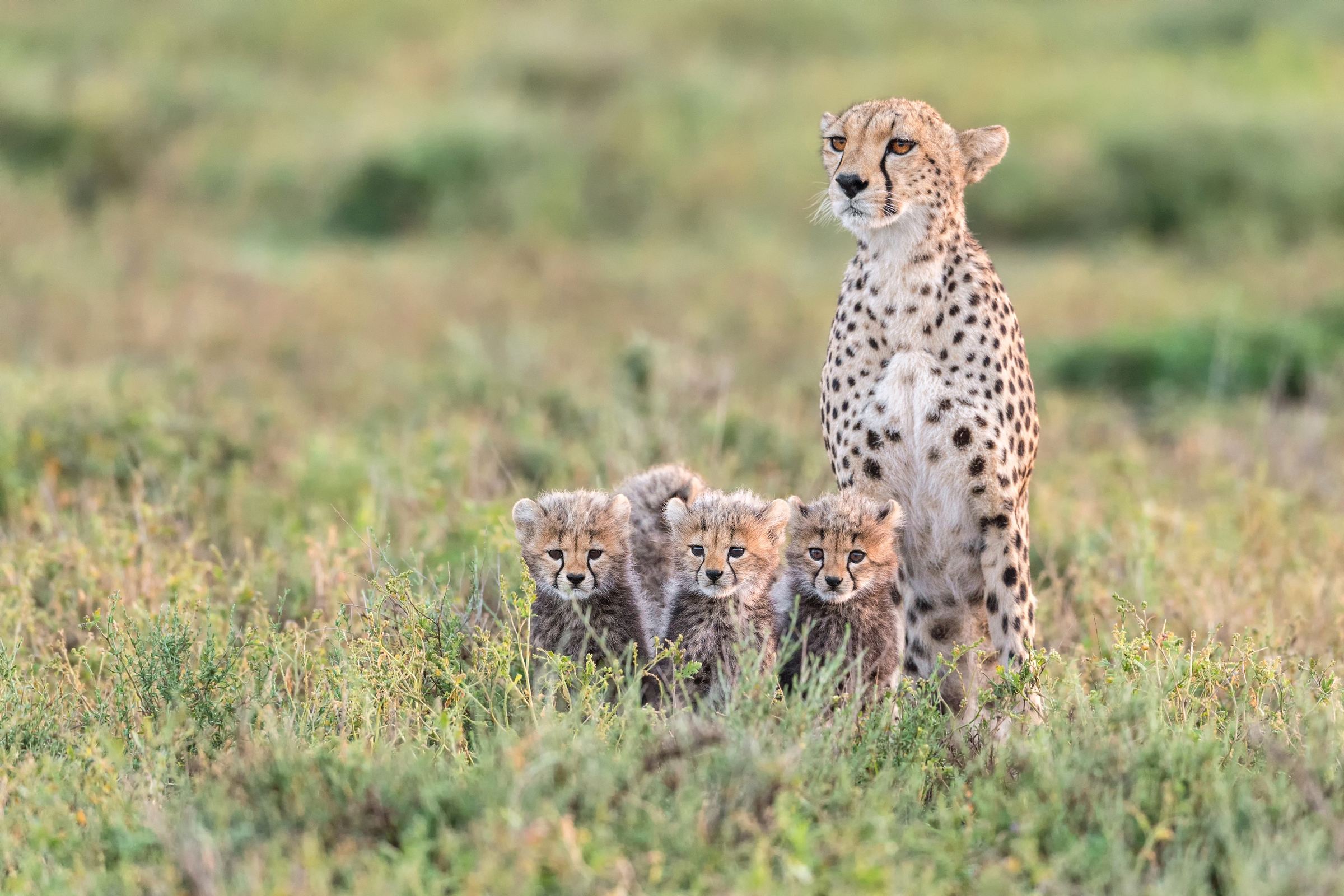
A mother cheetah sitting upright in short grass with her cubs gathered at her feet, looking toward the camera

A Wild Source camp · Opening December 2026

Siri Camp

A year-round tented camp on 110 private acres at the southern edge of the Serengeti ecosystem — where the resident big cats are, and the other vehicles aren't.

Why Siri

Siri means secret in Swahili.

A camp for safari purists, in a corner of the Serengeti ecosystem most travelers never see.

We chose the name because Siri offers a full range of diverse experiences focused on exploring and understanding the magic that surrounds us in this special corner of the Serengeti ecosystem. Our Big Cat Project team share the essential roles of the majestic big cats, walking safaris delve into the hidden secrets of the bush, and our neighbours include the original inhabitants of this place, whose lineage here spans over 40,000 years.

Siri is built for safari purists — travelers who want to focus on immersion in the wild and appreciate an experience unlike their normal lives at home. Our authentic safari approach taps into the spirit that thrilled travelers for decades: comfort, care, and the small touches that provide everything you need for an amazing experience, while staying connected to the environment around you.

The camp stands on 110 acres of private land at the southern edge of the ecosystem, about an hour south of Ndutu. On a scouting trip in August, our founder watched a mother cheetah with four cubs and a leopard with her cub in a tree — and didn't see another vehicle all day.

  1. 01
    Resident big cats, and no other vehicles In the dry season the migration is far to the north and tourism here is close to zero. The focus is the quality of each sighting — hours with a leopard or a cheetah family — rather than the number of species ticked.
  2. 02
    Off-road driving is allowed In most of the game-viewing area, which means a sighting is watched from the right place, not from the nearest track.
  3. 03
    Game drives with a Big Cat Project biologist Siri hosts the biologists of The Wild Source's Big Cat Project. Your drives double as their fieldwork.
  4. 04
    On foot with a certified walking guide Tracks and sign, the traditional uses of plants, and whatever crosses the path. Putting feet on the ground is the fastest way to understand a place.
  5. 05
    The oldest culture in East Africa, ten minutes away A small band of Hadzabe hunter-gatherers live on a remote stretch of the camp's land. Datoga blacksmiths, Maasai pastoralists and the market village of Makao are all within reach.
  6. 06
    Small, private, year-round Six guest tents and one two-bedroom family tent on land we own — so the camp stays through the seasons instead of moving with the crowds.

When to come

Two seasons. Two different camps.

The same tents, the same team — and a plain that changes character completely between the rains and the dry.

December – March

Calving season

This is when the southern plains earn their reputation. The migration herds are on the short-grass plains around Ndutu, the wildebeest drop their calves within a few weeks of each other, and the predators that follow them are never far away. Siri sits on the quiet side of it all — close enough to reach the action, far enough to come home to an empty camp.

  • Migration herds on the southern plains
  • Wildebeest calving, and the cats that follow it
  • Green grass, dramatic skies, few vehicles
June – October

Dry season

The great migration is far off in the northern Serengeti and there is very little tourism in this vast region. That is exactly the point. The Big Cat Project team works from camp through these months, and you can expect full-day game drives with lower diversity and quantities of animals — but a very high chance of locating, and spending significant time with, the resident big cats. The focus here is the highest quality of cat observation, arguably the most exclusive in East Africa, rather than quantities of wildlife, which you'll see in other parts of your itinerary.

  • Resident lion, leopard and cheetah, watched without an audience
  • Big Cat Project biologist on your drives
  • Best months for walking and cultural visits

Siri is open year-round. Ask us about April–May and November — the green months between the two seasons.

What you'll do

Drive with a biologist. Walk with a guide. Sit with the neighbours.

Guests coordinate with their guides each evening and choose. The emphasis is wildlife — but Siri can offer an unsurpassed range of cultural experiences and the chance to explore on foot.

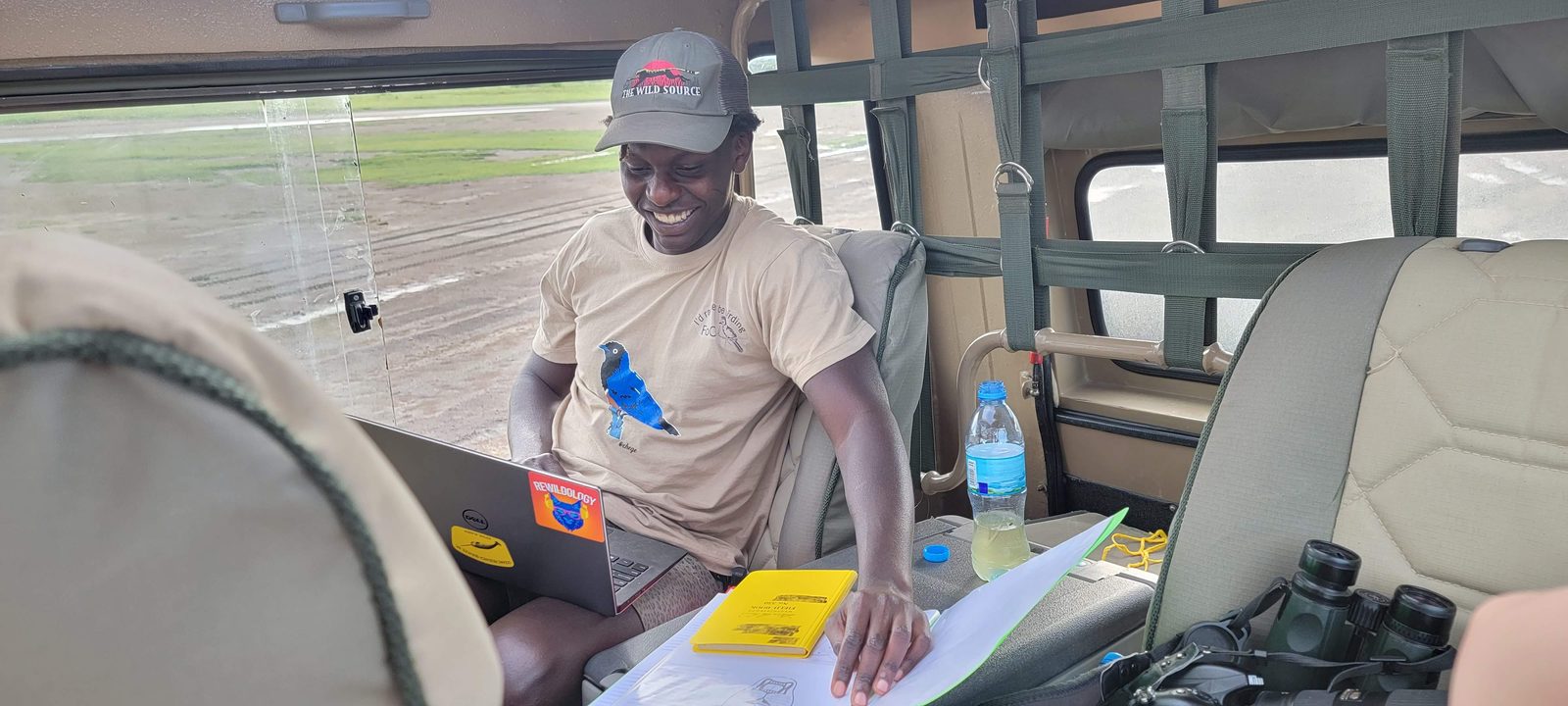
A guide in a safari vehicle recording sightings on a laptop and printed data sheets, binoculars beside him

Game drives

Big Cat Project game drives

Full-day drives with a Big Cat Project biologist in the vehicle. Off-road driving is allowed in most of the game-viewing area, so when the team finds a cat you stay with it — for as long as it's interesting.

  • Full-day drives
  • Off-road allowed
  • Biologist-hosted
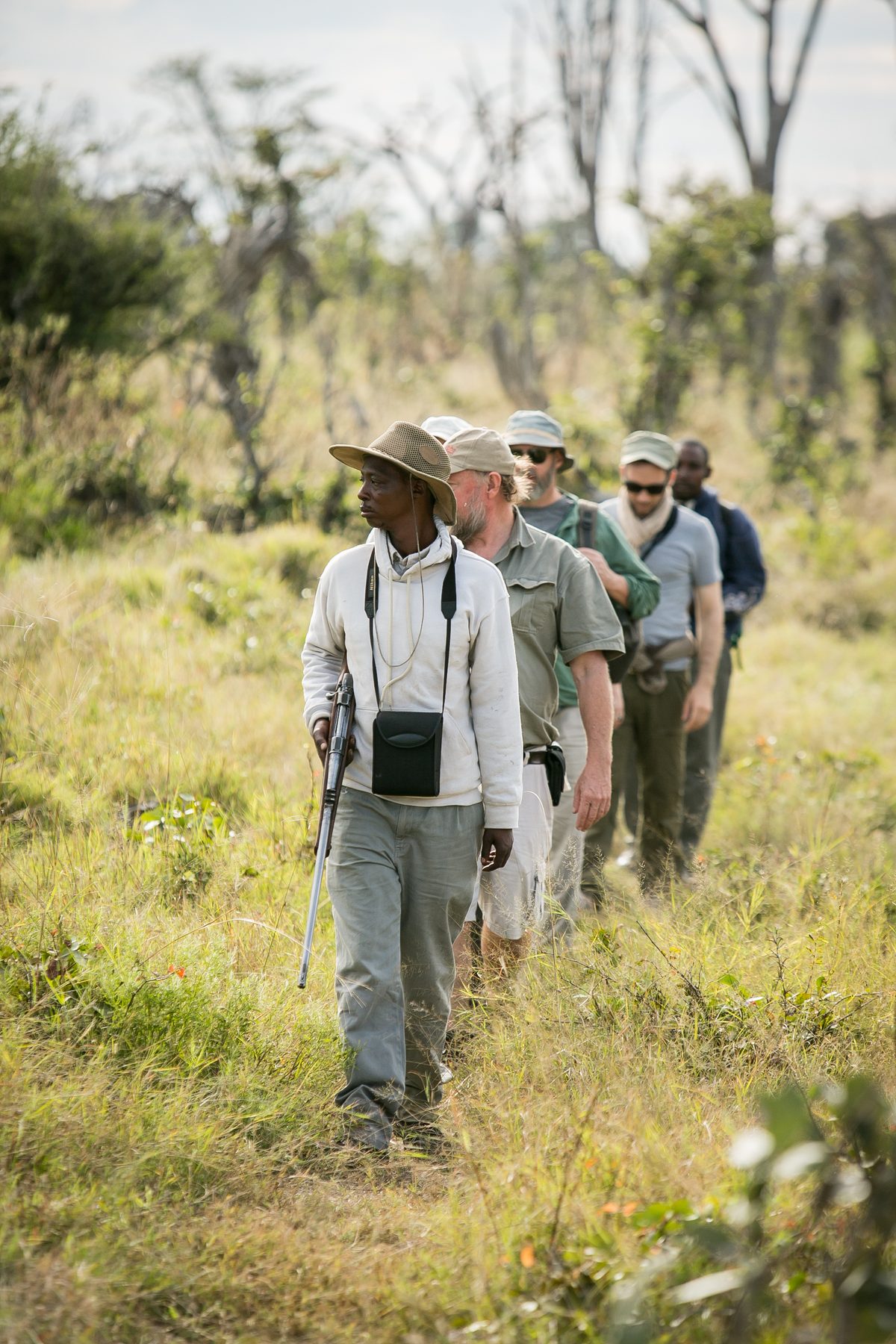
A small group walking single file through tall grass behind a guide, with acacia trees in the background

On foot

Walking safari

Siri means secret, and a walking safari is the best way to discover the secrets of the bush. Our certified walking guide leads the group, reading what nature shares: animal tracks and sign, the traditional uses of plants, and whatever appears along the way.

  • Certified walking guide
  • Morning walks
  • Private land
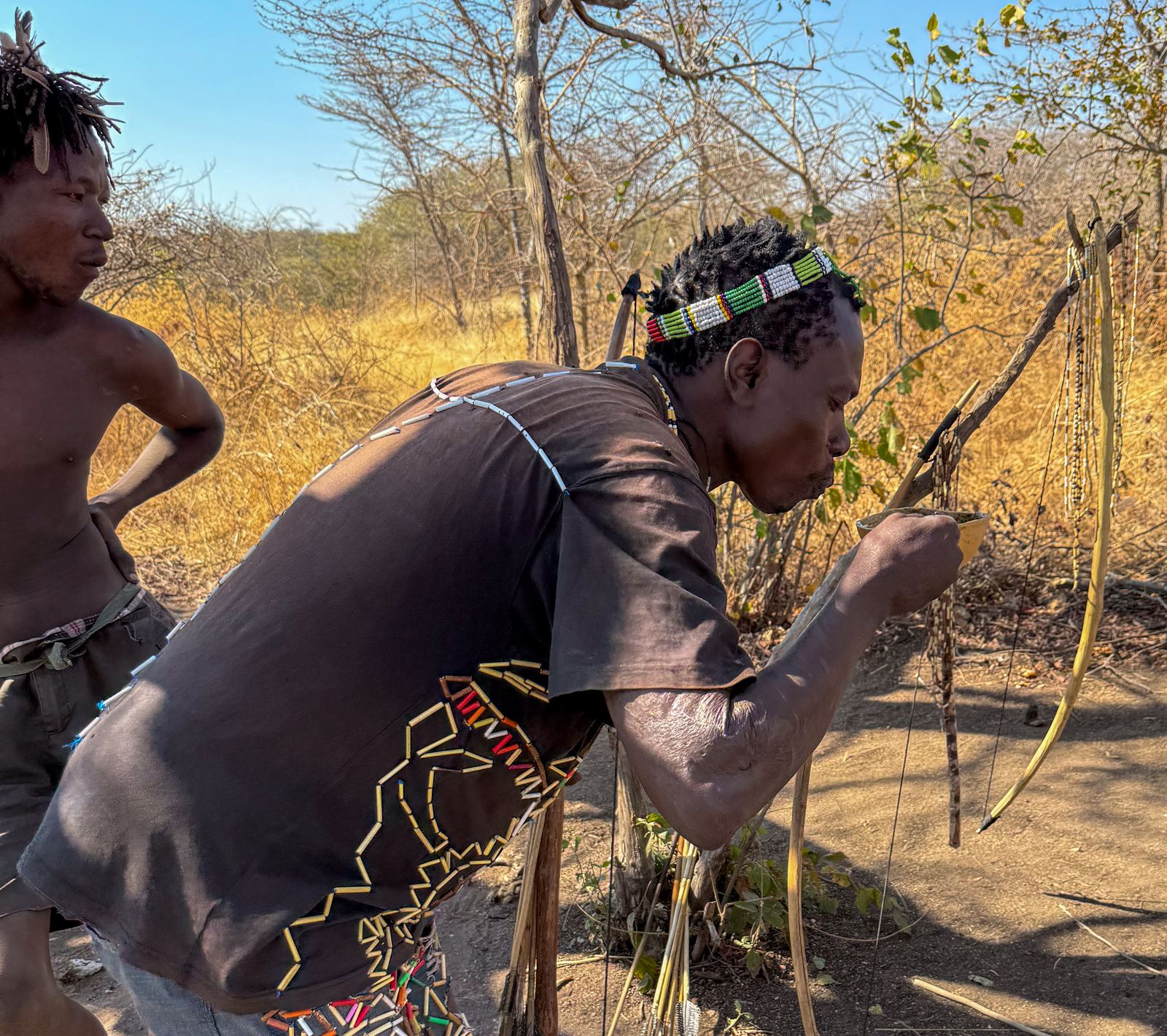
A Hadzabe man in a beaded headband drawing a bow, with a second man in the background among dry bush

Culture

Four cultures, one half-day

The Hadzabe are the most ancient culture in East Africa, living a hunter-gatherer life for over 40,000 years. With their nomadic way of life under threat, we have offered a small band of Hadzabe a place to live on a remote stretch of Siri's land, about ten minutes from camp. Visit them to learn some of their hunter-gatherer secrets and see how they build and live in their traditional huts.

  • Hadzabe
  • Datoga
  • Maasai
  • Sukuma

The Datoga are known for their blacksmith work; a visit to their village shows traditions being kept alive, from grinding maize to melting and shaping metal. The two communities are close together and combine into an interesting half day. On the drive in to Siri you pass Maasai areas that are well off the beaten path — for those who want the full range, we recommend visiting the Maasai on the way to camp rather than at one of the commercialized bomas. And twenty minutes away is Makao Village, mostly Sukuma — Tanzania's largest ethnic group — where you can see the commerce of a bustling village and stop for roasted corn on the street.

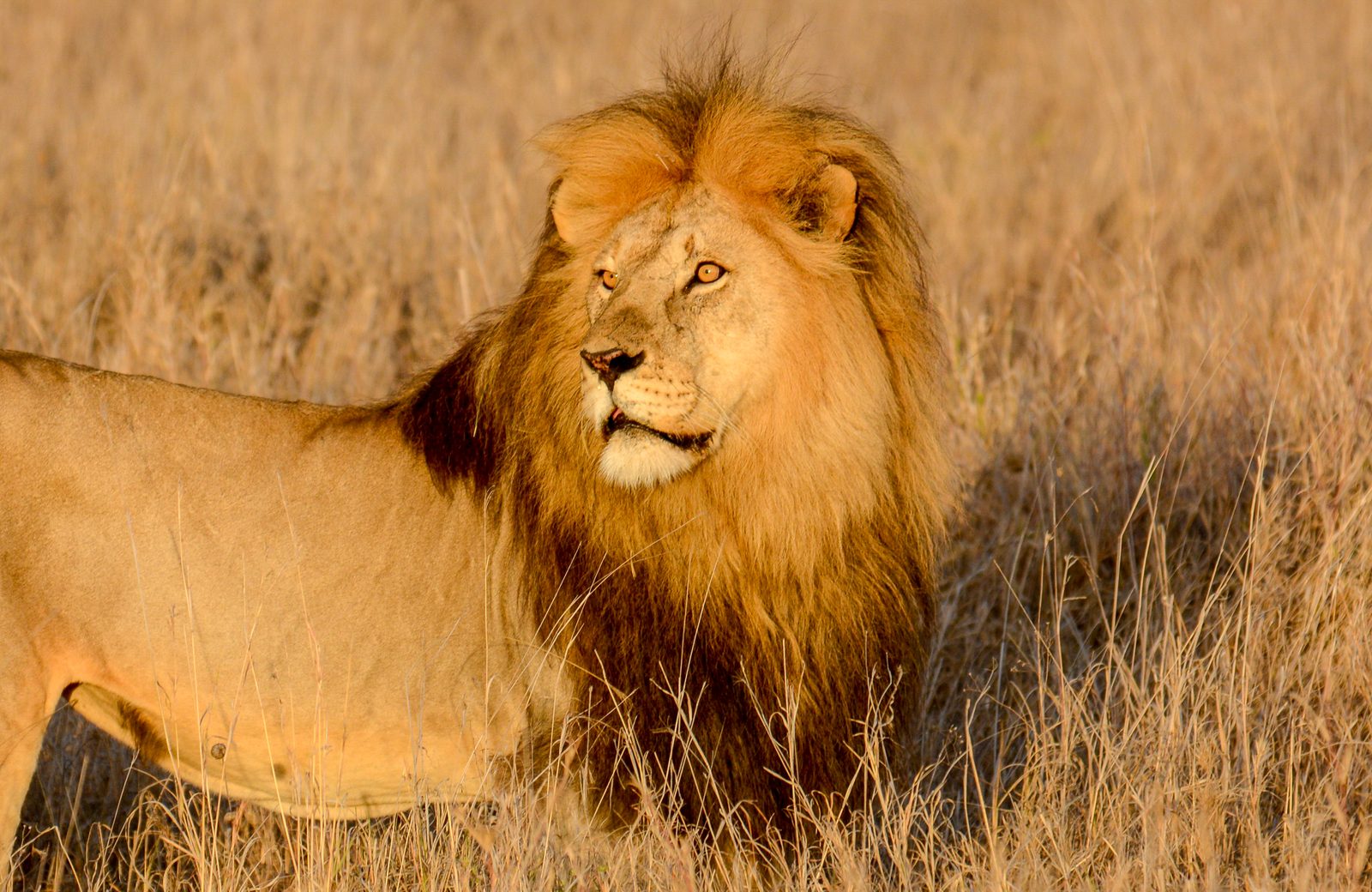
A male lion with a full mane in golden late-afternoon light, standing in dry grass
Resident male, dry season

The research

The Big Cat Project

A camp that exists because the biologists needed somewhere to sleep.

The Wild Source's Big Cat Project is gathering critical observational data on the southern plains through the dry season, when the great migration is far to the north and this vast region sees almost no tourism. One question the project is evaluating is the potential impact of tourism on big cats — and the dry season at Siri is a rare opportunity to observe cats frequently in the absence of other vehicles. That is the baseline the team needs, to compare with the more heavily visited times and places through the rest of the year.

A year-round camp makes year-round presence possible. The biologists live and work from Siri; your game drives are their fieldwork, and the hours you spend at a sighting go into the record.

The team's findings will be shared once the first full season is complete.

  • WhereSouthern plains, from Siri Camp
  • WhenDry season fieldwork, year-round presence
  • WhatBig-cat observations, tourism-impact baseline
  • YouBiologist on your drives; your sightings count

Where you stay

Classic canvas. Bucket showers. Solar power all night.

Six guest tents and one two-bedroom family tent, set apart on the land, with a lounge and dining tent open to the plain.

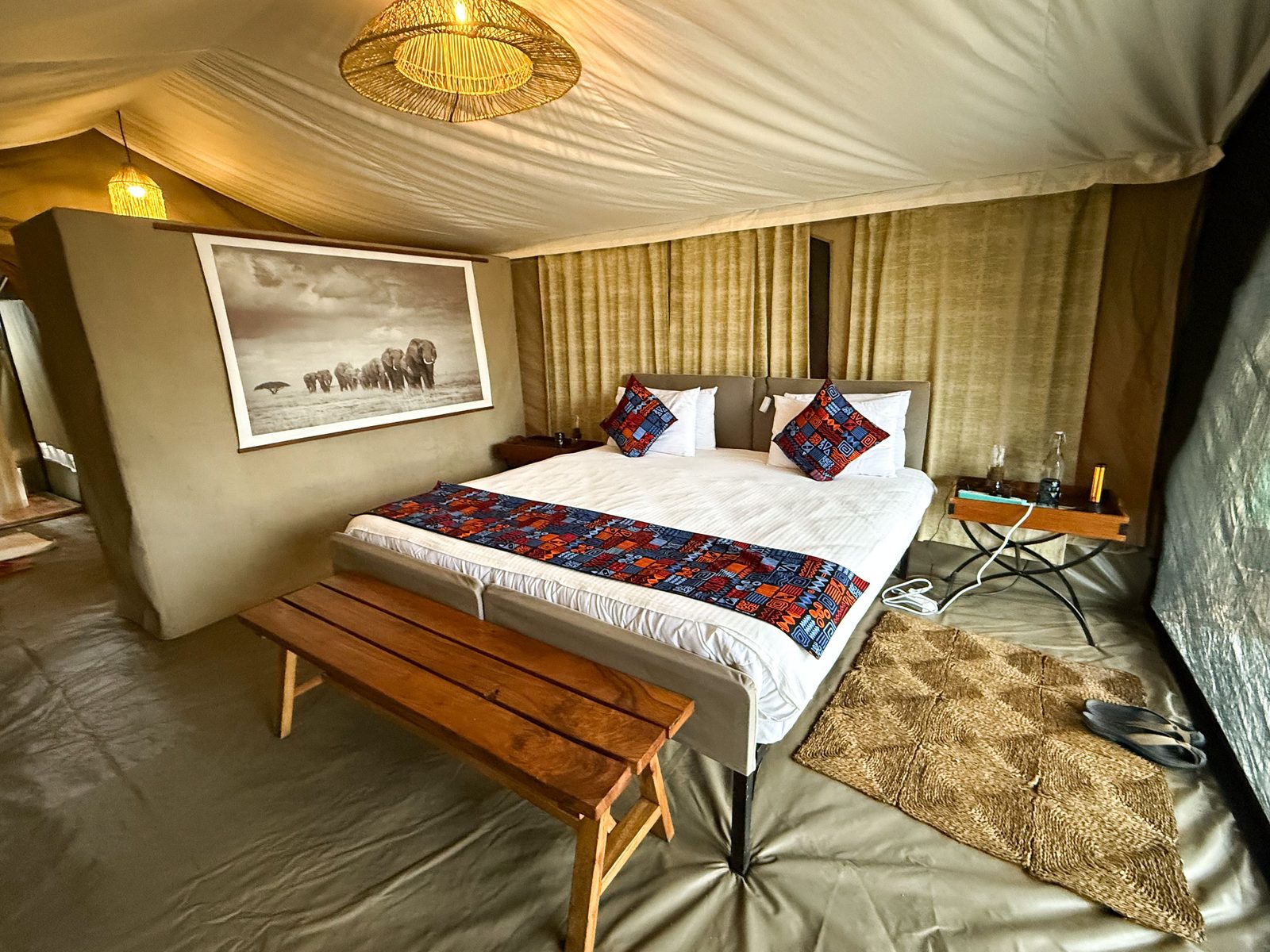
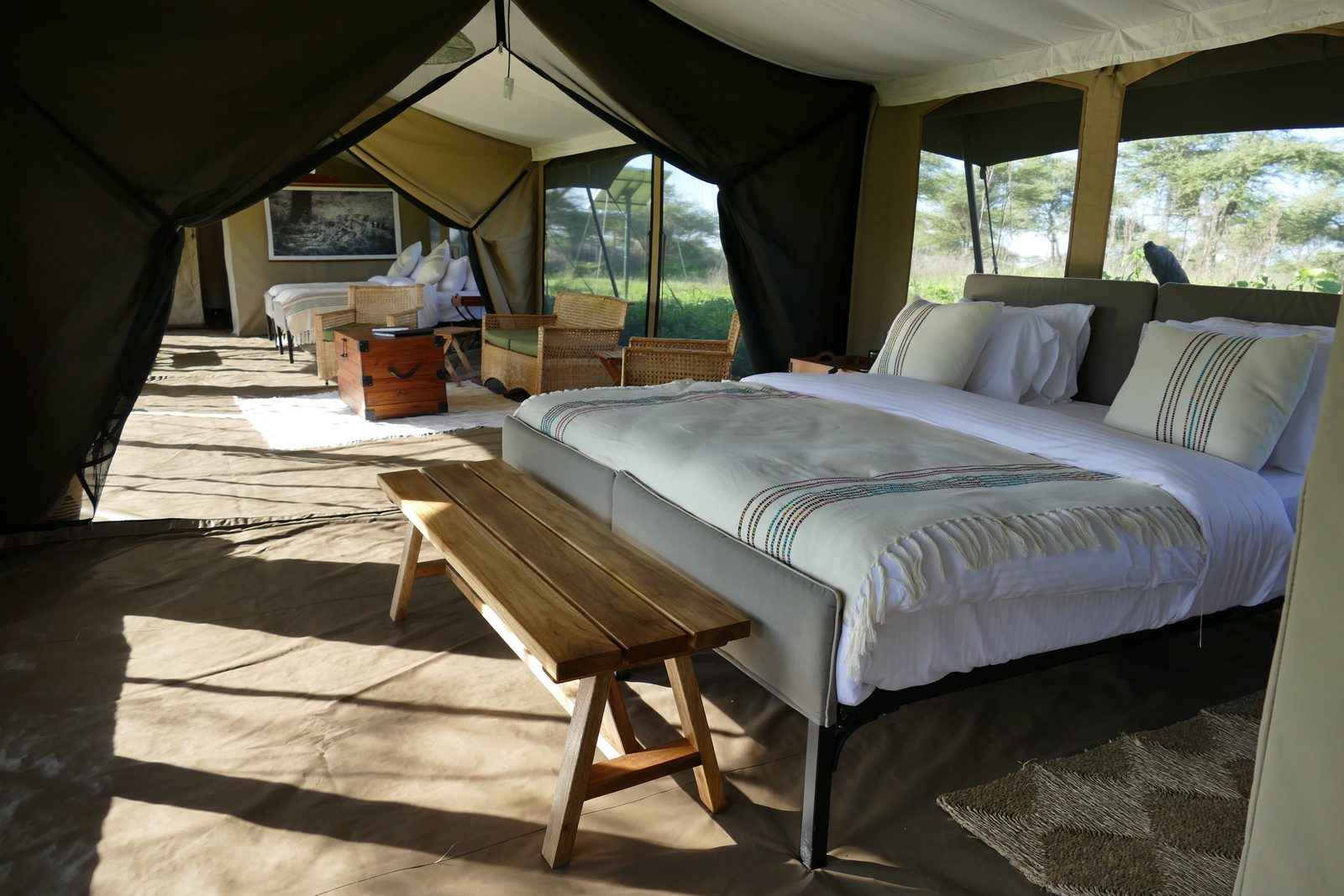
Interior of a guest tent: a made bed with patterned cushions, a wooden bench at its foot, a framed elephant print on the canvas wall

6 tents · sleeps 2

Guest Tent

Designed with a classic safari décor, each tent has a comfortable bed — set up as a king or two twins — with high-quality linens and duvets. There is a dressing area with a wardrobe, and the bathroom has a large vanity with running water, plus separate private shower and toilet areas.

Showers are the classic bucket setup found throughout the Serengeti: staff hoist a bucket of heated water, which is delivered through a normal shower head in the privacy of your own tent. An inverter system provides 24-hour solar electricity for lighting and charging on a power strip.

  • King or twins
  • En-suite
  • Hot bucket shower
  • 24-hr solar power
  • Dressing area
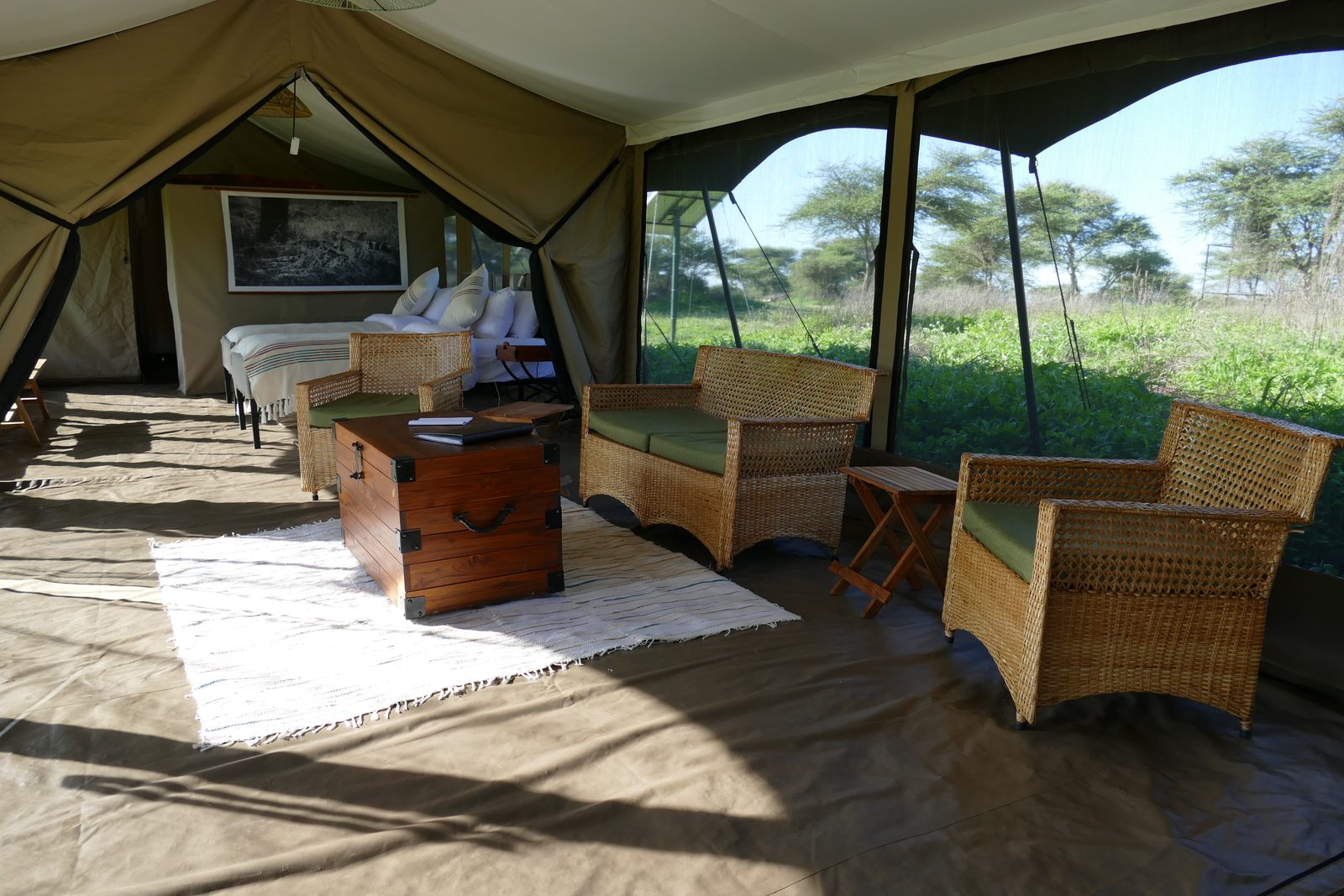
Bedroom of the family tent with a large bed, a wooden bench and mesh windows opening onto bush Living-room tent with cane armchairs, a wooden chest and rugs, open to the trees

1 tent · two bedrooms · sleeps 4

Family Tent

Two tents — each with its own bedroom and bathroom — connected by a living-room tent in between. The same classic safari décor, comfortable beds with high-quality linens and duvets, a dressing area with a wardrobe, vanity with running water, and separate private shower and toilet areas in each half.

Bucket showers heated by the staff, and 24-hour solar electricity for lighting and charging.

  • 2 bedrooms
  • 2 bathrooms
  • Shared living room
  • Hot bucket showers
  • 24-hr solar power
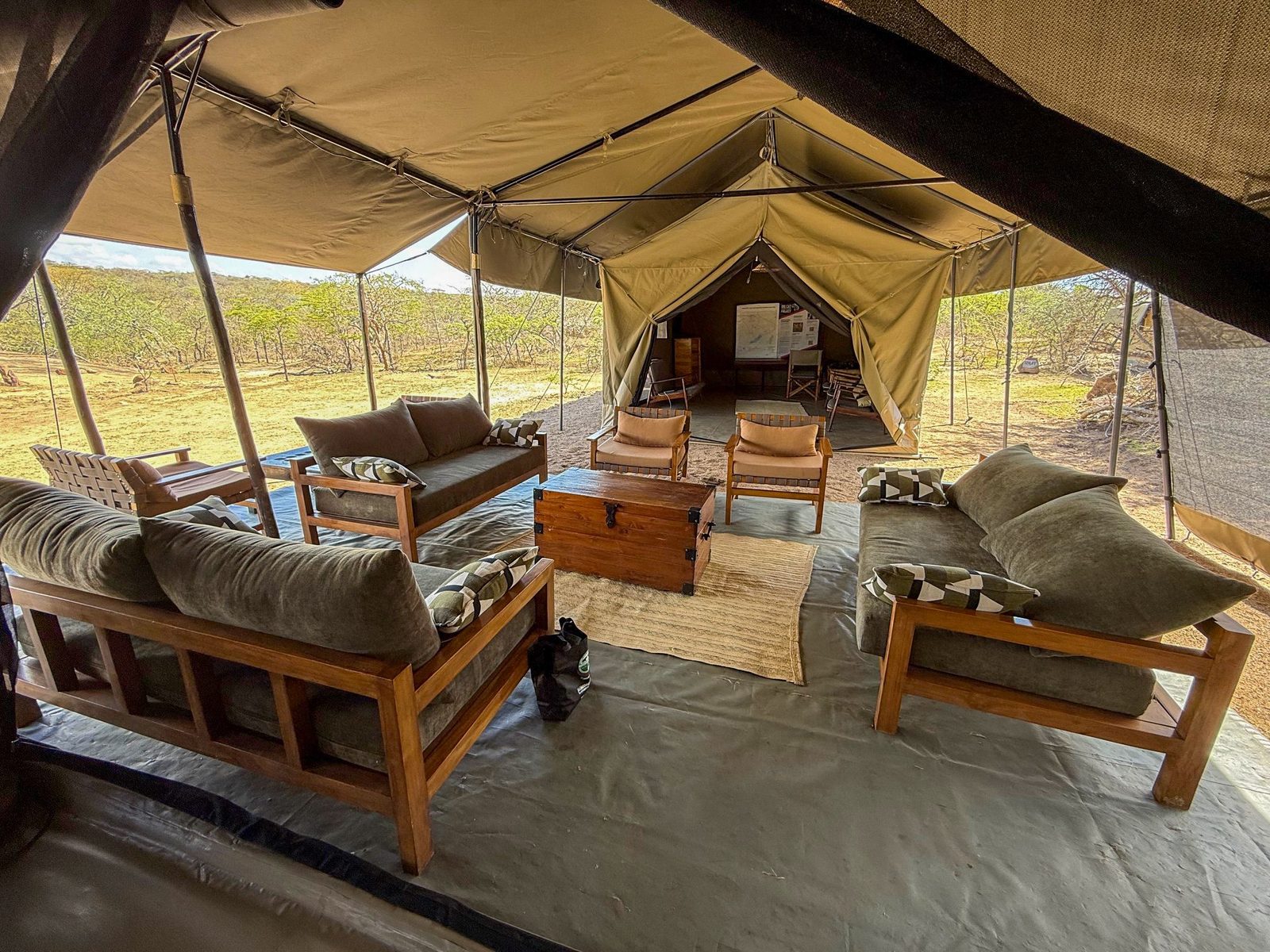
Open-sided lounge tent with cushioned sofas and wooden tables looking out over the plains
Lounge and dining
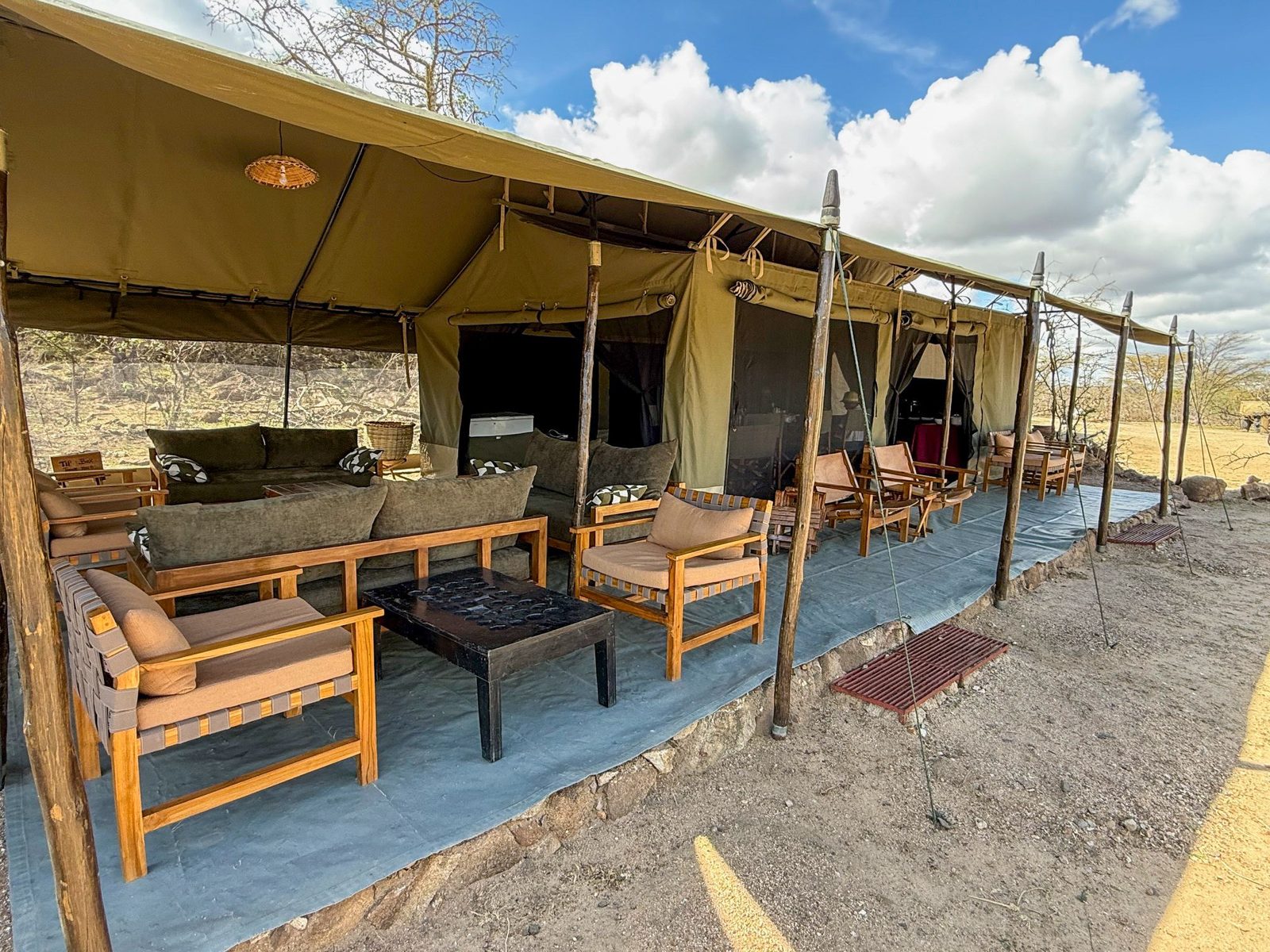
The lounge tent from outside under a blue sky with cumulus clouds, furniture set on a stone terrace
The lounge from outside
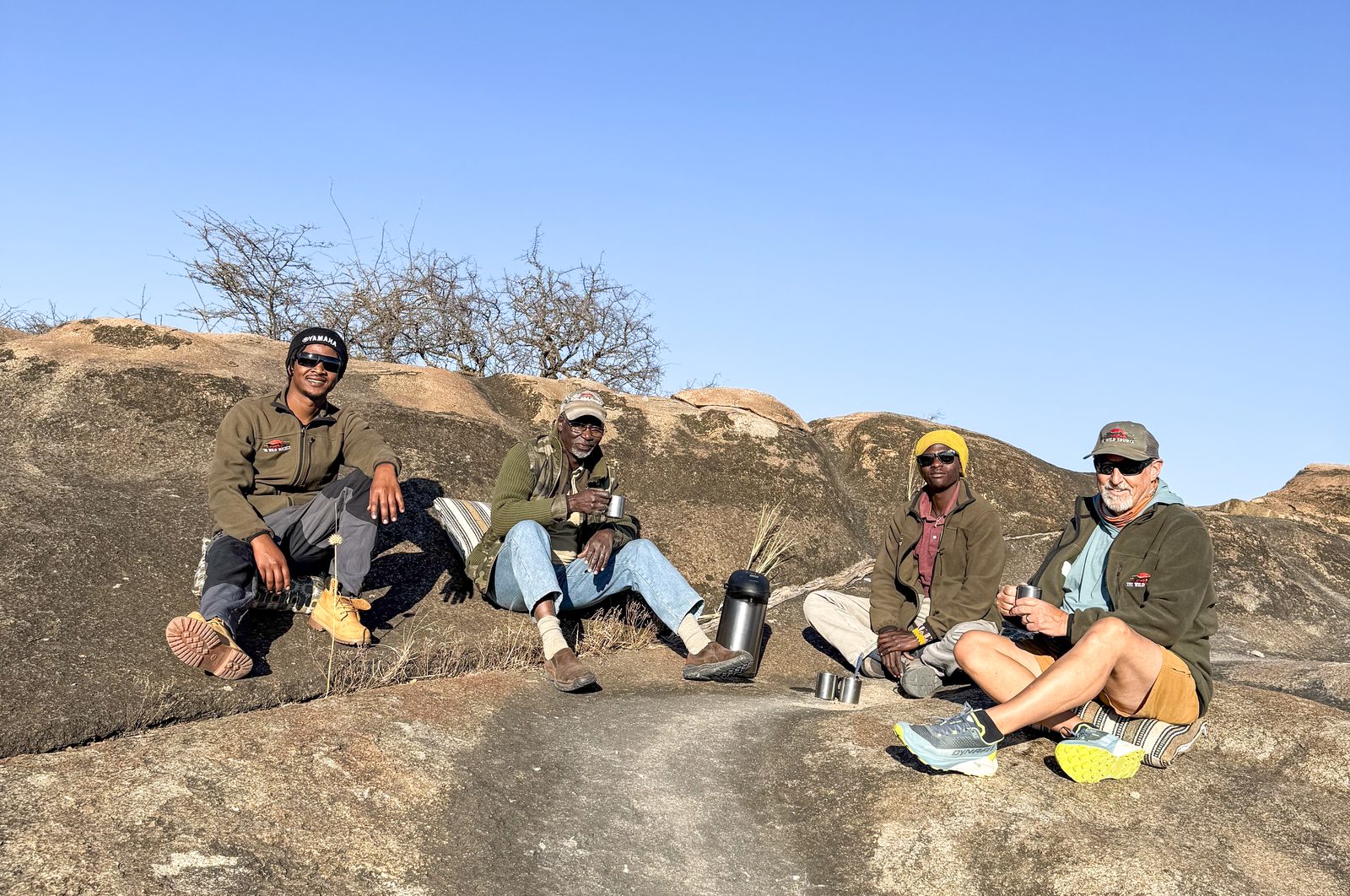
Four people sitting on a granite outcrop with a flask of coffee under a clear blue sky
Coffee on the kopje

What to expect

What Siri is, and what it isn't

Siri is a proper tented camp, not a lodge with canvas walls. There is no air conditioning. Hot water arrives in a bucket, hoisted by someone who knows your name. Power is solar and runs all night; WiFi is in the common area, not the tents. What you get in exchange is a camp that sits lightly on the land, an unobstructed view of the plain, and a budget that goes toward sightings rather than amenities you already have at home.

  • WiFi in the lounge
  • Solar power, 24 hours
  • No air conditioning
  • Hot bucket showers
  • Meals in camp

A Wild Source camp

Biologist-designed travel.

The same team that plans your safari runs the camp you stay in.

The Wild Source was founded by big cat researcher Bill Given, employs a staff of 20 in Africa, and runs its own guides and camps from an office in Arusha.

Siri is the newest of those camps — and the first built to stay in one place all year. It is booked through The Wild Source as part of a Tanzania safari, on its own or alongside Ndutu, the Serengeti and the Ngorongoro Crater, with the same planner from first email to the drive back to the airstrip.

Visit thewildsource.com for itineraries across Tanzania, Kenya, Botswana and beyond.

“Our safari was wonderful with Fadhil. Not only is he an excellent, knowledgeable guide, but he's a lot of fun to be with. He knew where to go to find the animals away from the crowds of other vehicles.”

Sherry · Wild Source traveler

“I just wanted to thank you for all the planning put forth for our trip. We had a great time. The more we explore Africa, the more we love it. We will be back again for sure.”

Barb · Wild Source traveler

“The accommodations were wonderful, the food was delicious… I'm running out of superlatives. This was very well planned on your part. Thank you for giving us the experience of a lifetime!”

Hindi · Wild Source traveler

Rates & planning

How Siri fits into a safari.

Siri is booked through The Wild Source as part of a Tanzania itinerary. Most guests pair it with Ndutu and the Serengeti — Siri for the private land, walking, culture and the cats; the parks for the sheer volume of wildlife. Three nights is the minimum we'd suggest to do all three things without rushing.

Rates are quoted per person per night and depend on the season. Ask us and a safari planner will send current rates, what's included, and a sample itinerary that fits your dates.

Whole-camp bookings. With six guest tents and the family tent, Siri sleeps up to 16 — the right size for a family reunion, a photographic group or a private expedition to take over the entire camp.

Ready when you are

Talk it through with the team.

Tell us when you're thinking of traveling and what you want to see. A safari planner in Colorado and our team in Arusha will come back with rates, availability and a sample itinerary.

Prefer to talk? 1 (720) 497-1250
Mon–Fri, 9am–5pm Mountain Time

Fields marked * are required.

A safari planner replies by email. No newsletter sign-up — we only use your details to answer you.